Local Elections in Algeria: Urban Governance and Real Estate Projects
The 2026 local elections in Algeria take place within an institutional framework marked by centralized decision-making power. This political context directly impacts urban governance, hindering innovation and the implementation of sustainable real estate projects. For investors, understanding this dynamic is essential to anticipate risks and identify opportunities. Discover how electoral mechanisms influence urban planning, and consult our price map, updated daily by wilaya, to assess real estate trends in real time.
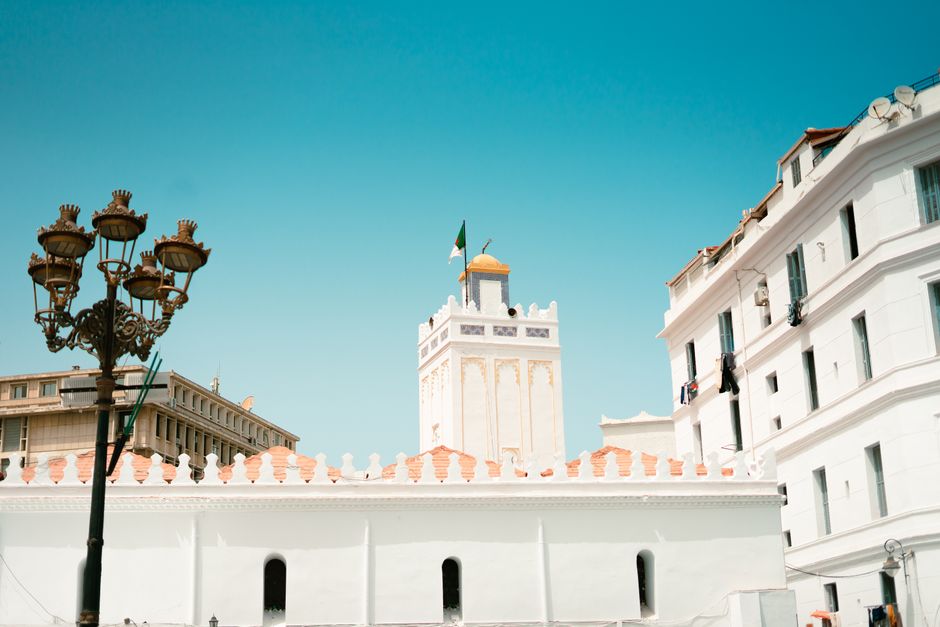
Local Elections in Algeria: Impact on Urban Governance
Although local elections are conducted under a legal framework established by ANIE, they remain largely controlled by state institutions. According to analyses published by Le Matin d’Algérie, the electoral process does not ensure genuine pluralism. The ban on foreign languages in campaigns, dominance of institutional parties, and restrictions on freedom of expression limit the diversity of urban projects proposed.
Urban governance, which should reflect local needs, is often directed by national priorities imposed from Algiers. This centralization reduces the capacity of local authorities to adapt their development plans to specific social, economic, and environmental contexts. As a result, innovative real estate projects—particularly in social housing or sustainable development—are frequently blocked or delayed due to decisions made far from the ground.
In 2023, according to the National Office of Statistics (ONS), 73% of urban development projects were approved by either the Ministry of Interior or the Ministry of Local Communities, illustrating the strong influence of central authorities. This situation limits local elected officials’ ability to act independently, affecting both the quality and speed of real estate project execution.
Centralized Decision-Making Hinders Urban Innovation
Urban planning decisions are no longer the result of local dialogue but of a hierarchical process. This reduces flexibility in real estate projects. For example, in sensitive neighborhoods of Constantine, citizen-led initiatives for green spaces or low-cost housing were rejected due to lack of prior approval from the Ministry.
Impact on Real Estate Projects: Practical Cases by Wilaya
The political control over urban governance translates concretely into the implementation or suspension of real estate projects across several key wilayas.
- Algiers: Despite promises of urban renewal, rehabilitation projects in the city center—such as the Casbah—proceed slowly. In 2025, only 12% of planned works had been completed, according to APS, due to central authorities imposing changes to project plans.
- Oran: The modernization project for the Bir El Djir neighborhood was suspended in 2024 after a transport ministry decree demanded a change in route for safety reasons. This decision, made without local consultation, delayed expected deliveries by 18 months.
- Constantine: A social housing project of 3,000 units, approved by the wilaya in 2023, was frozen in 2025 by an instruction from the Ministry of Housing. The stated reason: “non-compliance with national guidelines.” Such blockages are common in areas where decisions are centralized.
These examples show that even seemingly simple projects—such as renovating a building or creating a park—can be obstructed by distant decisions. For investors, this means project profitability depends not only on local demand but also on administrative smoothness, often compromised by political control.
Investment Advice Despite the Political Framework
Given these constraints, investors can adopt a strategy of anticipation. Rather than focusing on major cities where decisions are centralized, it is wise to explore areas where local governance—however limited—shows signs of openness.
Middle-sized cities or rural areas near urban centers often offer greater flexibility. For instance, in Tlemcen wilaya, rental housing projects emerged through partnerships between the wilaya and private developers, without prior ministry intervention. These projects, though regulated, were approved faster than similar initiatives in larger cities.
Investors can also turn to areas where local authorities have established local urban planning committees, even if modest. These structures—though not formally legitimate—can promote better consideration of local needs. To identify such opportunities, consult our directory of urban planning experts and real estate agencies registered on DZ-Immobilier, which collaborate with local actors.
Additionally, renovation projects of existing buildings—especially in city centers—are less prone to blockages. They require fewer administrative permits and can be launched more quickly, even in a politically controlled environment.
Comparative Table: Project Stability by Wilaya
| Criterion | Algiers | Oran | Constantine | Tlemcen |
|---|---|---|---|---|
| Average approval time | 18 months | 14 months | 22 months | 8 months |
| Number of blocked projects (2025) | 23 | 17 | 31 | 5 |
| Citizens' participation | Low | Moderate | Low | High |
| Access to housing credit | Difficult | Moderate | Difficult | Easy |
FAQ — Frequently Asked Questions
What is the impact of local elections in Algeria on real estate projects?
Although local elections are formally held, they do not guarantee genuine local urban governance. Centralized political control influences land-use decisions, leading to delays or blockages of real estate projects—even in cities with high demand.
Which wilayas have the fewest blocked real estate projects?
Wilayas such as Tlemcen, Béchar, and El Oued show relative openness, particularly due to local initiatives and stronger civic participation. These areas offer a more favorable environment for real estate investors.
Who can help investors navigate Algeria’s political framework?
Real estate agencies registered on DZ-Immobilier, urban planning experts listed in the expert directory, and mortgage brokers at DZ-Immobilier can guide investors in selecting viable projects compliant with local regulations.
How do local elections influence price per square meter in Algiers, Oran, and Constantine?
Due to project blockages, housing supply remains limited. In Algiers, the price per square meter reaches approximately 140,000 DA in the city center (source: price map by wilaya). In Oran, it is 85,000 DA, and in Constantine, 62,000 DA. These prices are influenced by the scarcity of new housing, driven by centralized decision-making.
Conclusion
The 2026 local elections in Algeria, while formally structured, do not reflect genuine democratic urban governance. Deep political control affects the execution of real estate projects, particularly in major cities. For investors, the opportunity lies in areas where local governance—though limited—shows signs of openness. Anticipate risks, leverage on-the-ground tools, and use our resources: free property valuation or the daily-updated price map by wilaya.